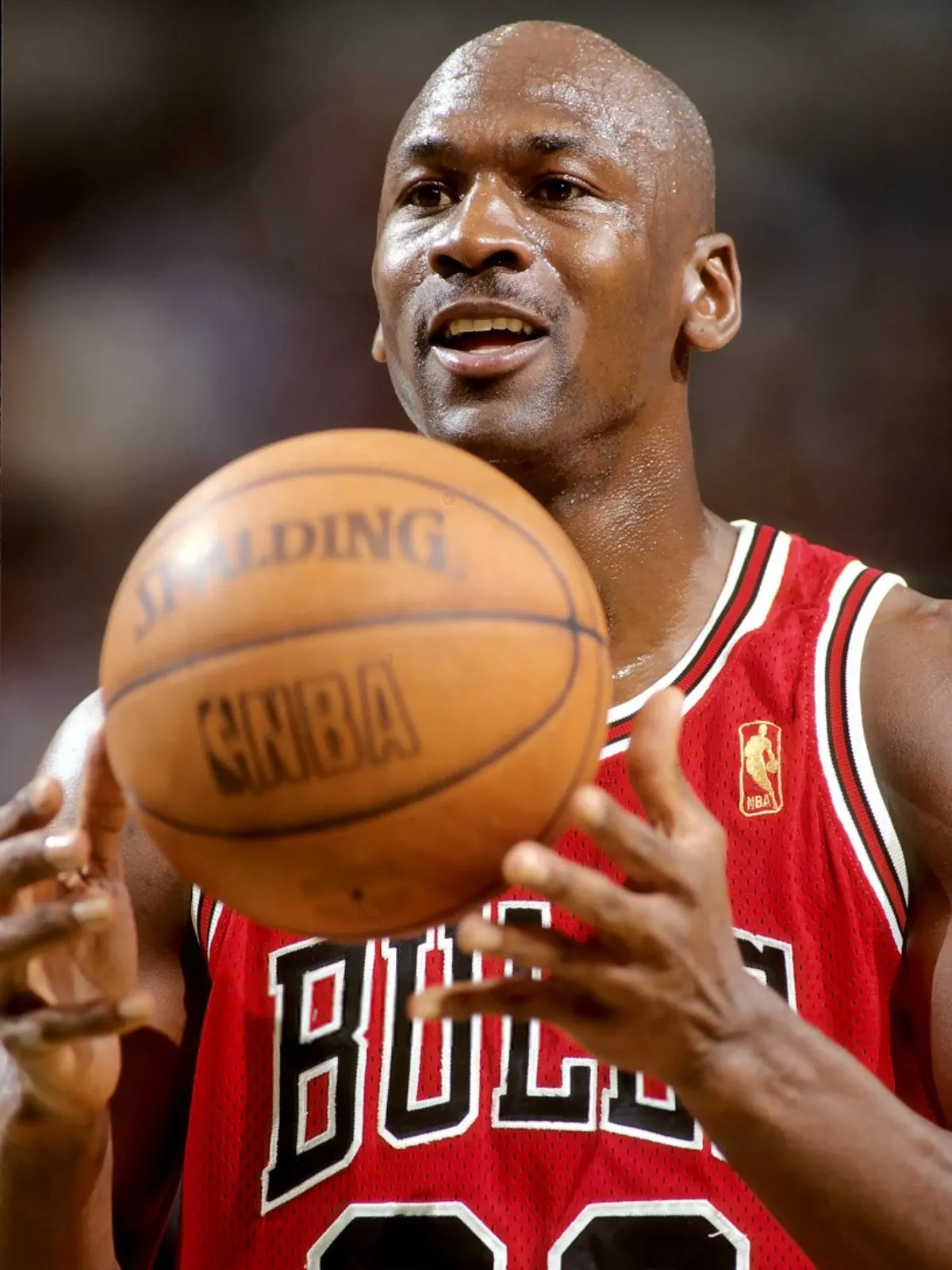
Some athletes leave the stage slowly. Michael Jordan's last act with the Chicago Bulls lasted about forty seconds — a layup, a steal and a jump shot — and it delivered a sixth championship. Even people who have never watched a full basketball game know the image: Jordan holding his follow-through at the top of the key in Salt Lake City, the ball dropping through the net.
The end of something
Chicago entered the 1998 Finals trying to win its sixth championship in eight seasons. The first three titles had come in 1991–93; the next two arrived in 1996 and 1997. This series offered a chance to finish a second three-peat, against the same opponent the Bulls had beaten a year earlier.
Two three-peats
The 1998 title was the end of a remarkable second act. Jordan's Bulls first won three straight championships from 1991 to 1993, beating the Lakers, the Portland Trail Blazers and the Phoenix Suns. Then, in October 1993, Jordan stunned the sports world by retiring at the age of 30. He spent the next season playing minor league baseball.
Jordan returned in March 1995, announcing, "I'm back." The following season, with Rodman added to the roster, Chicago went 72–10, at the time the best record in NBA history, and won the title. A second championship followed in 1997, against the same Utah team. In 1998, Jordan won his fifth regular-season MVP award.
Utah again
For the second straight year, the Bulls met the Utah Jazz in the Finals. Utah was a superb team built around two future Hall of Famers, power forward Karl Malone and point guard John Stockton, and coached by Jerry Sloan. Both teams finished the regular season at 62–20. Utah held home-court advantage in the Finals.
The Bulls won three of the first four games, including a historic 42-point rout in Game 3. Utah answered by winning Game 5 in Chicago, sending the series back to Salt Lake City. If the Jazz won Game 6, they would host a Game 7 — and Chicago would have to win on the road.
Game 6
The Bulls' situation looked fragile. Pippen had injured his back and could barely play; he spent long stretches in the locker room getting treatment. Chicago leaned on Jordan more heavily than ever, and he responded by scoring relentlessly, finishing with 45 points in a game where few of his teammates found any rhythm.
Utah, playing in front of a deafening home crowd, led most of the fourth quarter. With under a minute to go, Stockton hit a three-pointer that put the Jazz ahead 86–83. Chicago now needed to recover a three-point deficit.
Forty seconds
What followed has been replayed countless times.
The layup. Jordan took the inbound pass, drove past his defender and scored quickly, cutting Utah's lead to 86–85 and leaving plenty of time on the clock.
The steal. On the next possession, Utah went to its most reliable play: the ball to Malone in the post. As Malone gathered himself, Jordan slipped in from the weak side and stripped the ball away. The Bulls had possession with a chance to win.
The shot. Jordan brought the ball up himself. With the clock running down, he drove right against Bryon Russell, stopped abruptly with a crossover and rose for a jumper from just beyond the free-throw line. Russell stumbled — Utah fans still argue that Jordan pushed off — and the shot went in with 5.2 seconds left. Chicago 87, Utah 86.
Stockton's three-point attempt at the buzzer missed. The Bulls were champions again.
The aftermath
Jordan was named Finals MVP for the sixth time in six Finals appearances. The Bulls had won six championships in eight seasons, interrupted only by the stretch when Jordan first retired to play baseball.
Then, as expected, the team was broken up. Jackson left. Pippen was traded to Houston. Rodman was released. Jordan retired again in early 1999, citing in part the departure of the coach and teammates he trusted. He would later return for two seasons with the Washington Wizards, making the Salt Lake City jumper his final shot as a Bull.
Why it is remembered
The sequence is worth watching as three connected plays. The layup reduced the deficit without using much time. The steal gave Chicago possession without needing a foul. The jumper completed the turnaround. Remembering only the shot misses how Jordan created the opportunity to take it.