In June 2013 the San Antonio Spurs were seconds away from a championship. The yellow ropes were being prepared to hold back the crowd for the trophy celebration. Then a Miami Heat guard stepped back into the corner and changed everything.
A year later, the same two teams met again. What followed was one of the most complete team performances in NBA Finals history — a response to heartbreak that people still describe as "the beautiful game."
The setting
The 2012–13 Heat were the defending champions, built around LeBron James, Dwyane Wade and Chris Bosh. James was at the height of his powers, coming off his fourth MVP award.
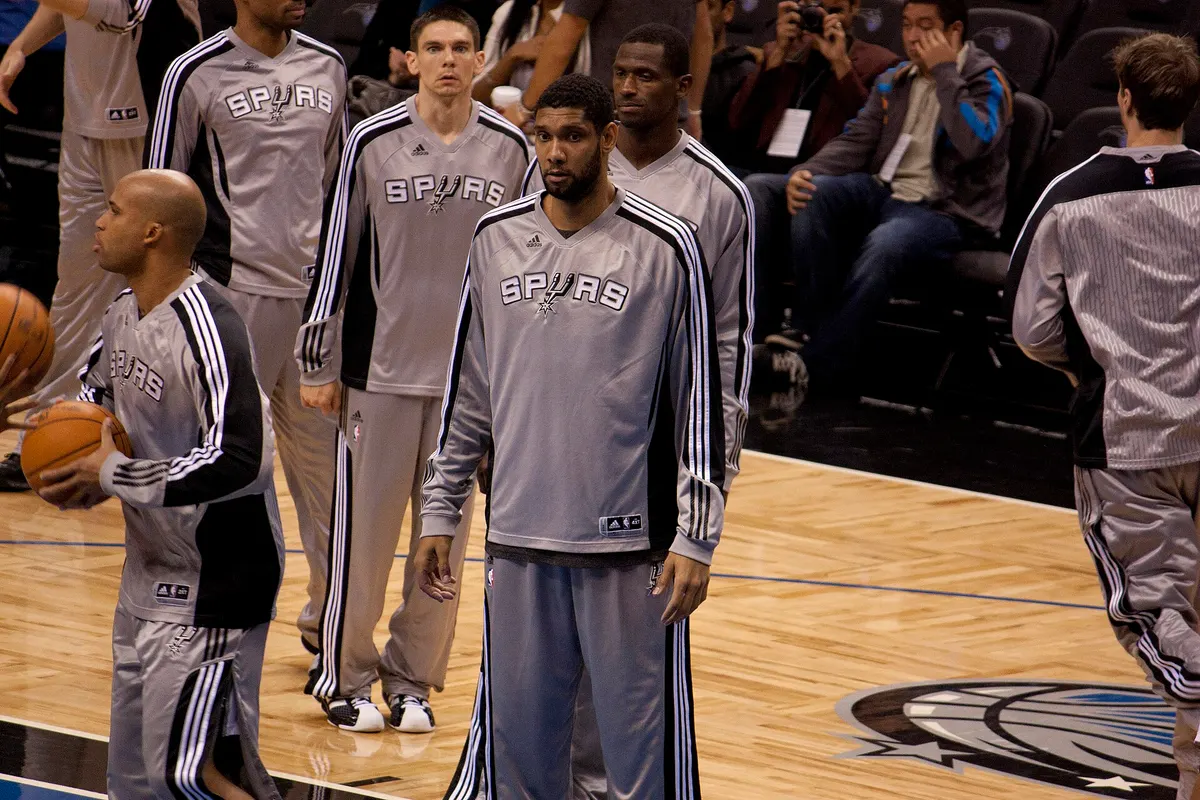
The Spurs were the league's model of consistency. Tim Duncan, Tony Parker and Manu Ginóbili had already won three championships together, coached by Gregg Popovich. Many considered them past their prime. They were not.
Game 6, 2013
San Antonio led the series 3–2 heading into Game 6 in Miami. With under half a minute left in regulation, the Spurs led by five points. League officials began bringing out the yellow tape to rope off the floor for the trophy presentation. Some Heat fans headed for the exits.
James hit a three-pointer to cut the lead to two. San Antonio made one of two free throws, keeping the lead at three. Miami had one more chance.
James missed a three-point attempt. Chris Bosh grabbed the offensive rebound and passed it out to Ray Allen in the right corner. Allen, the most prolific three-point shooter in NBA history at the time, backpedaled behind the line without looking down and released the shot with about five seconds left. It went in. The game was tied.
Miami won in overtime, then won Game 7 two nights later to claim back-to-back championships. James was named Finals MVP. For the Spurs, it was one of the most painful defeats any team has suffered in the Finals.
Turning pain into fuel
Popovich has said that he thought about Game 6 every day afterward. Instead of hiding from it, the Spurs used it. They returned the following season with the same core and the same purpose, and they posted the league's best record.
The team also had a rising star. Kawhi Leonard, a quiet, powerful forward in his third season, had been a key defender in the 2013 Finals. In 2014 he was ready for a larger role.
The playoffs set up the rematch everyone wanted: Spurs vs. Heat, again.
The beautiful game
Game 1 in San Antonio became famous for an odd reason: the arena's air conditioning failed, the temperature inside soared, and James left late in the game with severe leg cramps. The Spurs won. Miami took Game 2. Then the series changed completely.
In Games 3, 4 and 5, the Spurs played some of the most precise offensive basketball the Finals have ever seen. The ball moved constantly. Players passed up good shots to find great ones. Duncan, Parker and Ginóbili provided experience; Danny Green and Patty Mills hit open shots; Boris Diaw organized the offense from the frontcourt. Leonard attacked relentlessly on offense and guarded James on defense.
San Antonio won the three games by huge margins. The series ended 4–1, and the Spurs' average margin of victory — 14 points a game — was the largest in Finals history at the time.
Leonard, just 22 years old, was named Finals MVP. Duncan won his fifth championship — fifteen years after his first.
A team from everywhere
The Spurs were also a symbol of how global the NBA had become. Parker grew up in France. Ginóbili came from Argentina, where he had won Olympic gold in 2004. Diaw was French, Mills Australian and Tiago Splitter Brazilian. Duncan himself was from the U.S. Virgin Islands.
Popovich and general manager R.C. Buford built that roster deliberately, scouting international leagues long before many teams took them seriously. The players arrived used to team-oriented basketball, where moving the ball mattered more than individual statistics. In the 2014 Finals, that style was on full display.
What came next
The 2014 Finals were the end of an era for Miami. That summer, James announced he was returning to Cleveland, where he would win a championship two years later after the Cavaliers' famous comeback against Golden State.
For San Antonio, 2014 was the last title of the Duncan era. Duncan retired in 2016, Ginóbili in 2018, and Parker soon after. Leonard became one of the league's best players and later won another championship and Finals MVP award with the Toronto Raptors in 2019.
Why it is remembered
Two Finals, one year apart, told a complete story. The first showed how fragile a championship can be — a few seconds, one rebound, one corner three. The second showed how a team can respond to that kind of loss: by sharing the ball, trusting each other and playing basketball the way coaches dream it can be played.
Ray Allen's shot is one of the most famous in NBA history. The Spurs' answer may be even more instructive.